

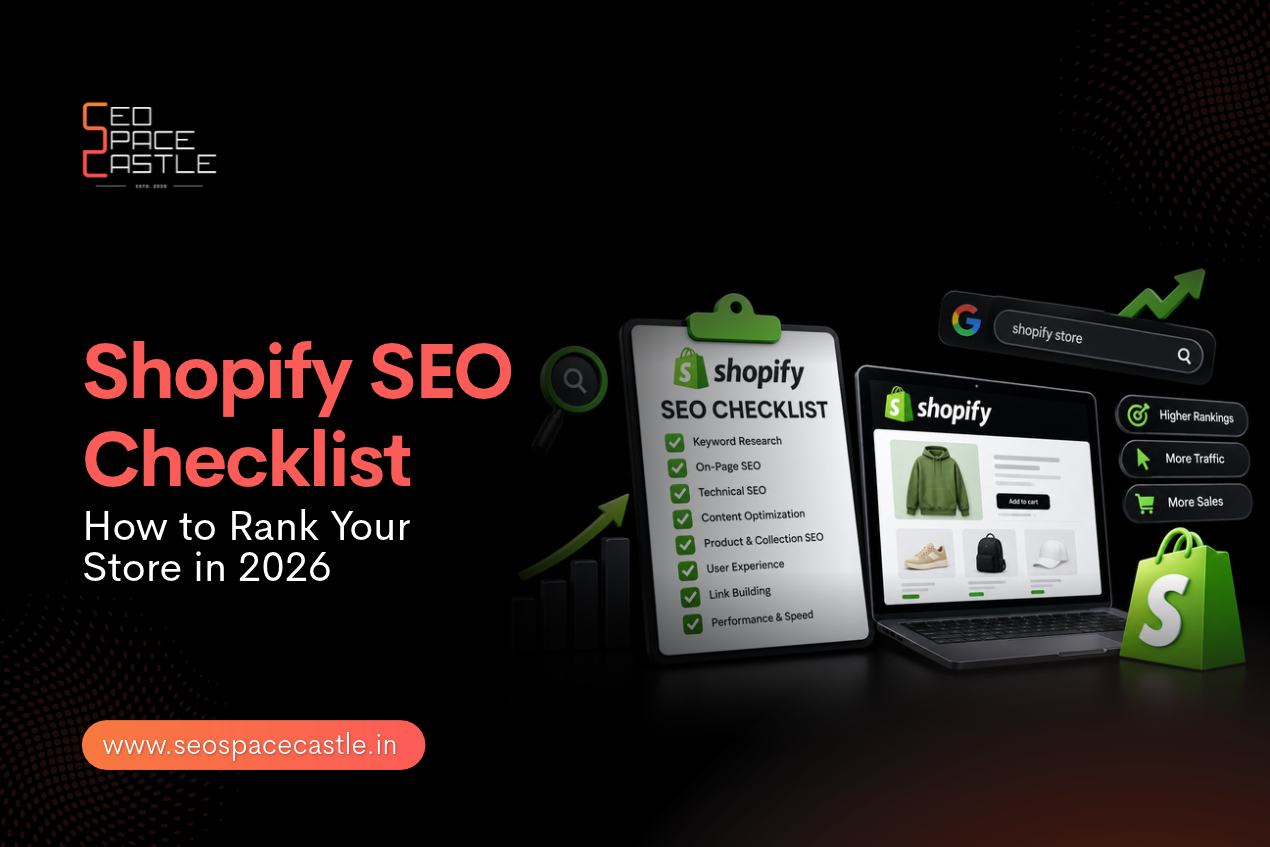
Having a Shopify store involves more than just listing your products and waiting for sales. Your customers must find your products before they can make a purchase. This is where Shopify SEO comes into play. A reliable Shopify SEO company can help identify technical issues, improve product visibility, and create a stronger foundation for long-term organic growth.
Ecommerce SEO will depend on valuable content, a seamless shopping experience, and sites that are understandable for search engines in 2027. Below is an easy-to-use checklist for improving your Shopify store.
1. Optimise Your Product Pages
Product pages should inform shoppers about the product details accurately.
- Make clear product titles and descriptions.
- Use relevant keywords in a natural way.
- Use quality images that have descriptive alt text and are well-optimised.
- Add important product information, price and shipping details, etc.
Good shopping SEO helps search engines decide about your products and queries.
2. Make Your Collections Easy to Find
Shopify collections help customers discover related products and navigate your store more easily. Here’s what you should do:
- Use clear names for collections.
- Write explanations for important collections.
- Link related products and collections together.
- Do not create multiple pages that have the same information as the ones that you have already created.
If a Shopify store is well-structured, it makes shopping easier and helps search engines to understand the structure of the shop.
3. Check Your Technical SEO
According to a report by Baymard Institute, the average e-commerce cart abandonment rate sits at 70.19%. While SEO brings shoppers to your store, a simple shopping and checkout experience helps them complete their purchase. A slow or poorly organised website can frustrate shoppers and affect search visibility.
Your technical SEO checklist should include:
- Checking mobile performance and page speed.
- Fixing broken links and indexing issues.
- Reviewing duplicate URLs and canonical tags.
- Ensuring important pages can be crawled.
These steps support SEO for e-commerce website performance and help search engines discover your key pages.
4. Add Relevant Schema Markup
Schema helps search engines understand information such as product prices, availability, reviews, and shipping details.
Use suitable schema markup and check that it matches the information shown on your pages. Correct structured data can make your products eligible for enhanced search results, but it does not guarantee them.
5. Prepare for AI-Powered Search
Search is evolving, and shoppers may discover products through AI-powered search experiences as well as traditional search engines.
Create helpful buying guides, answer common product questions, and keep product information accurate. Strong ecommerce search engine optimisation services should consider both traditional search and emerging discovery methods.
6. Track What Works
Check your organic traffic, product page performance, search queries, and sales. Use Google Search Console and analytics tools to find pages that need improvement.
An experienced ecommerce seo consultant can help turn these insights into a practical plan.
Need Help Growing Your Shopify Store?
Getting your Shopify store noticed takes more than adding keywords to product pages. From technical SEO and collection optimisation to content strategy and organic performance tracking, every improvement matters.
At SEO Space Castle, we help ecommerce businesses identify SEO opportunities, improve website structure, and build strategies focused on relevant traffic and long-term growth.
Our Shopify SEO approach combines technical improvements, search intent research, and content optimisation to help your products reach the right audience.
Ready to improve your Shopify store’s search visibility? Connect with SEO Space Castle to explore a practical ecommerce SEO strategy.
Resources
According to a report by Baymard Institute, the average e-commerce cart abandonment rate sits at 70.19%.
